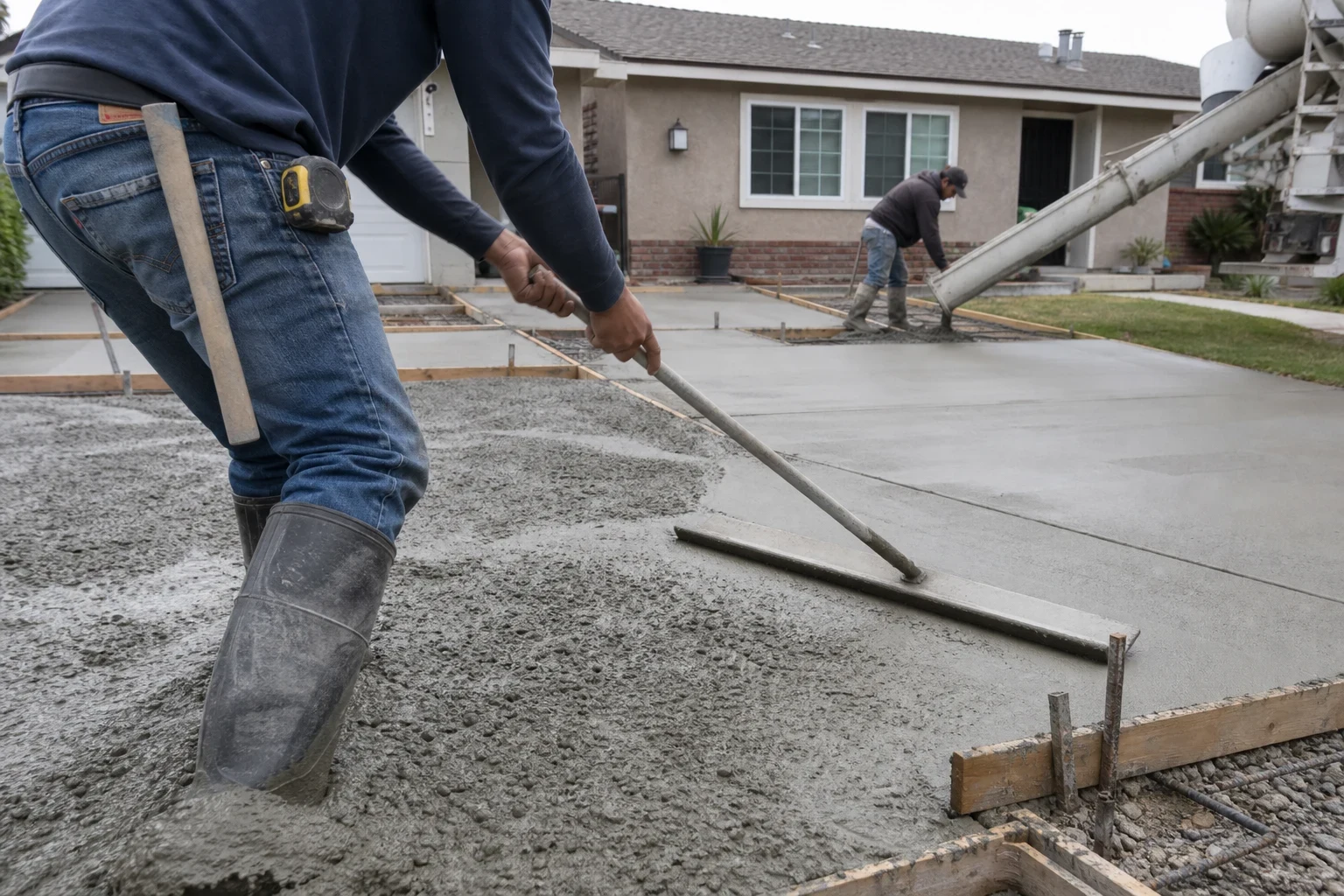
ServicesConcrete Courtyards
Concrete Courtyards in Cerritos
A courtyard sits close to your walls, doors and windows, so the concrete has to slope away and drain cleanly. We look over the space first, tell you plainly what we find, then pour a courtyard that suits how you want to use it.
An enclosed space needs a careful plan
A courtyard is usually boxed in on two or three sides by the house, a garden wall or a fence. That makes it a pleasant, private spot to sit. It also means rainwater has fewer places to go, and every pour has to work around thresholds, downspouts and planters.
Before we suggest anything, we walk the space with you. We check the existing grade, where water collects now, how high your door sills sit, and what is under any old concrete or pavers. Then we explain what we found in plain terms and give you options, not a sales pitch.
We have been in business 15+ years and we are licensed by the California State License Board (CSLB). Courtyards are some of our favorite jobs, because small details like a quarter inch of slope make a big difference in how the space lives.
What a courtyard project includes
Site inspection and findings
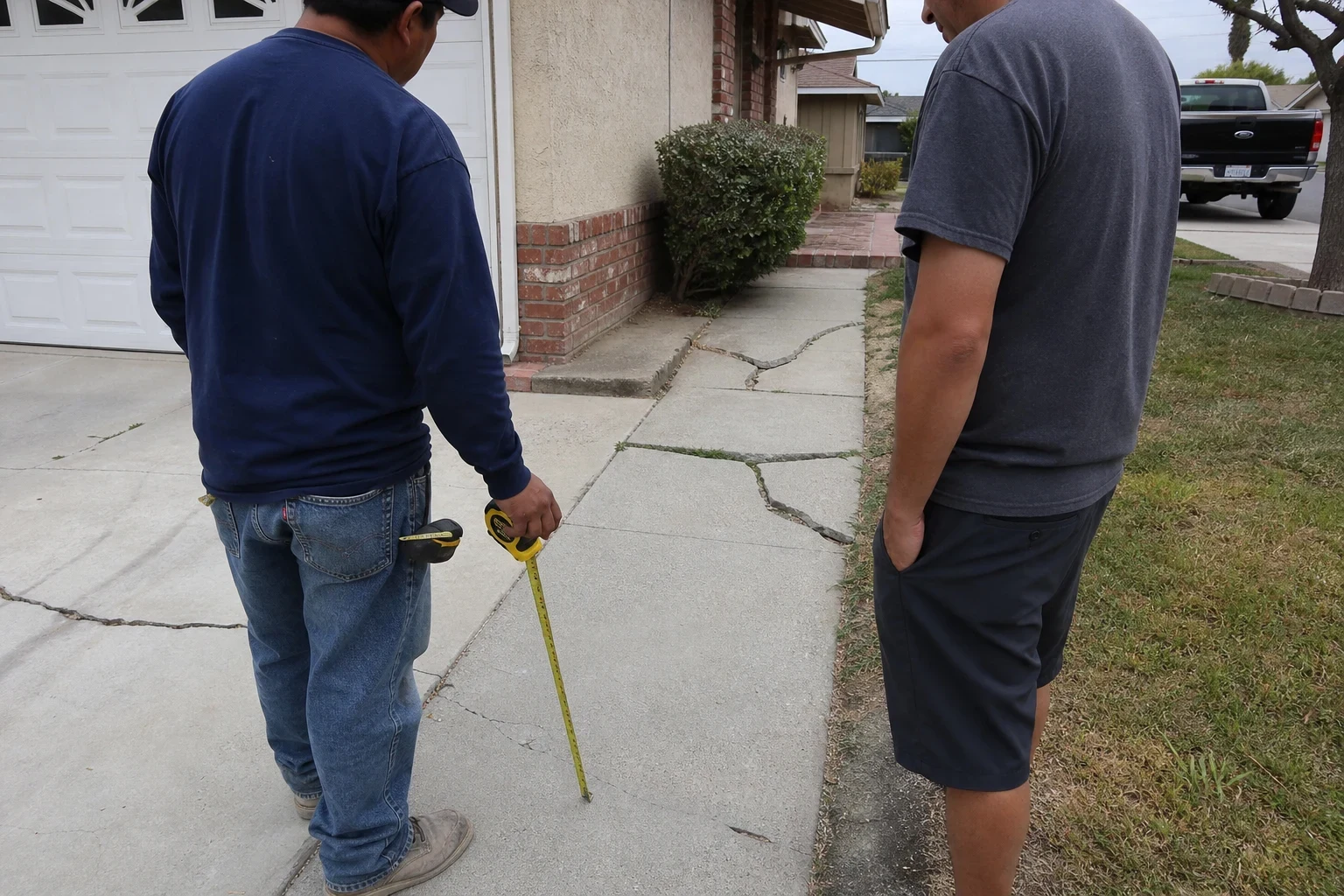
We measure the space, check slopes toward and away from your home, and note soil, roots and buried lines. You hear what we saw before you hear a recommendation.
Removal and haul-off
If there is old concrete, brick or gravel in the way, we break it out and haul it off. We protect walls, stucco and plantings while we do it.
Grading and base prep
We cut the grade so water runs away from your foundation and doors, then place and compact a base. In clay soil this step matters more than anything you will see on the surface.
Drainage that fits the space
Enclosed courtyards often need a channel drain or area drains tied to a safe outlet. We plan these before the pour so they sit flush and look intentional.
Reinforcement and joints
We place rebar or wire as the slab calls for and lay out control joints so any shrinkage cracks fall in straight lines where you expect them.
Finish of your choice
Broom, smooth trowel, exposed aggregate or a pattern from our stamped concrete work. We help you pick a finish that is comfortable underfoot and easy to sweep.
Signs it is time for a new courtyard
- Water pools near the house
- Puddles that sit against a wall or door after a rain mean the surface slopes the wrong way. New concrete with proper fall moves that water out.
- Old slab is heaved or sunken
- Sections that have lifted from tree roots or dropped over soft soil create trip edges. When the slab has moved that much, replacing it is often the honest answer.
- Dirt, mulch or loose pavers
- A courtyard that tracks mud into your home or has shifting pavers is hard to enjoy. A solid surface gives you a clean space for chairs, pots and a table.
- You want to use the space more
- Maybe the courtyard is a side entry you walk past instead of a place you sit. A new layout can add room for seating, a planter bed or a better path to the door.
How your courtyard job runs
- 1
Phone call and visit
You tell us how you use the courtyard and what bothers you about it now. We set a time to come out and look.
- 2
Inspection and written estimate
We share what we found, including any drainage or grade issues, and give you a line-item estimate. If we think a simpler plan will serve you better, we say so.
- 3
Demolition and prep
We remove old material, set the grade, install drains and compact the base. Forms go in along walls and thresholds so the finished height is right.
- 4
Pour and finish
We place the concrete, finish it to the surface you picked and cut or tool the joints. We rinse down walls and clean up before we leave.
- 5
Curing and handoff
We tell you when you can walk on it and when furniture can go back. Your courtyard is covered by our 1-year warranty.
What moves the price of a courtyard
Every courtyard is priced from what we see on the visit, so we do not quote a number before we look. Your written estimate lists each part of the job, so you can see where the money goes and adjust the plan if you want.
- Access
- Many courtyards can only be reached through a gate or side yard. If a truck cannot get close, concrete may need to be pumped or wheeled in, which adds labor.
- Removal and soil condition
- Breaking out an old slab costs more than clearing dirt. Soft or wet soil may need extra base material before we can pour.
- Drainage work
- Channel drains, area drains and the pipe to carry water away add parts and time, but they protect your home.
- Size and shape
- Curves, steps down from a door and cuts around posts or planters take more forming than a simple rectangle.
- Finish
- A broom finish is the most straightforward. Stamped patterns, color and exposed aggregate take more material and skill.
Courtyard questions we hear often
- Can you pour right up against my house?
- Yes, but we set the height below your door sills and weep screed and slope the slab away from the wall. We usually add an expansion joint where the concrete meets the house so the two can move independently.
- Do I need a drain in my courtyard?
- Not always. If there is a clear path for water to run out, slope alone may be enough. When walls close in the space, a drain is usually the safer choice, and we will show you why during the visit.
- How long before I can use it?
- Light foot traffic is typically fine after a day or two. We ask you to wait about a week before setting heavy pots or furniture, and we will give you specific timing for your pour.
- Will the work make a mess of my home?
- We cover nearby walls, windows and plants and keep tools and material in the work area. Washout and debris leave with us at the end of each day.
- Can a courtyard match my patio or walkway?
- Usually, yes. We can match a finish or pattern from our patios and walkways and sidewalks work so the spaces connect, and we will tell you honestly if an exact color match is not realistic.
Ready to make the courtyard a place you use
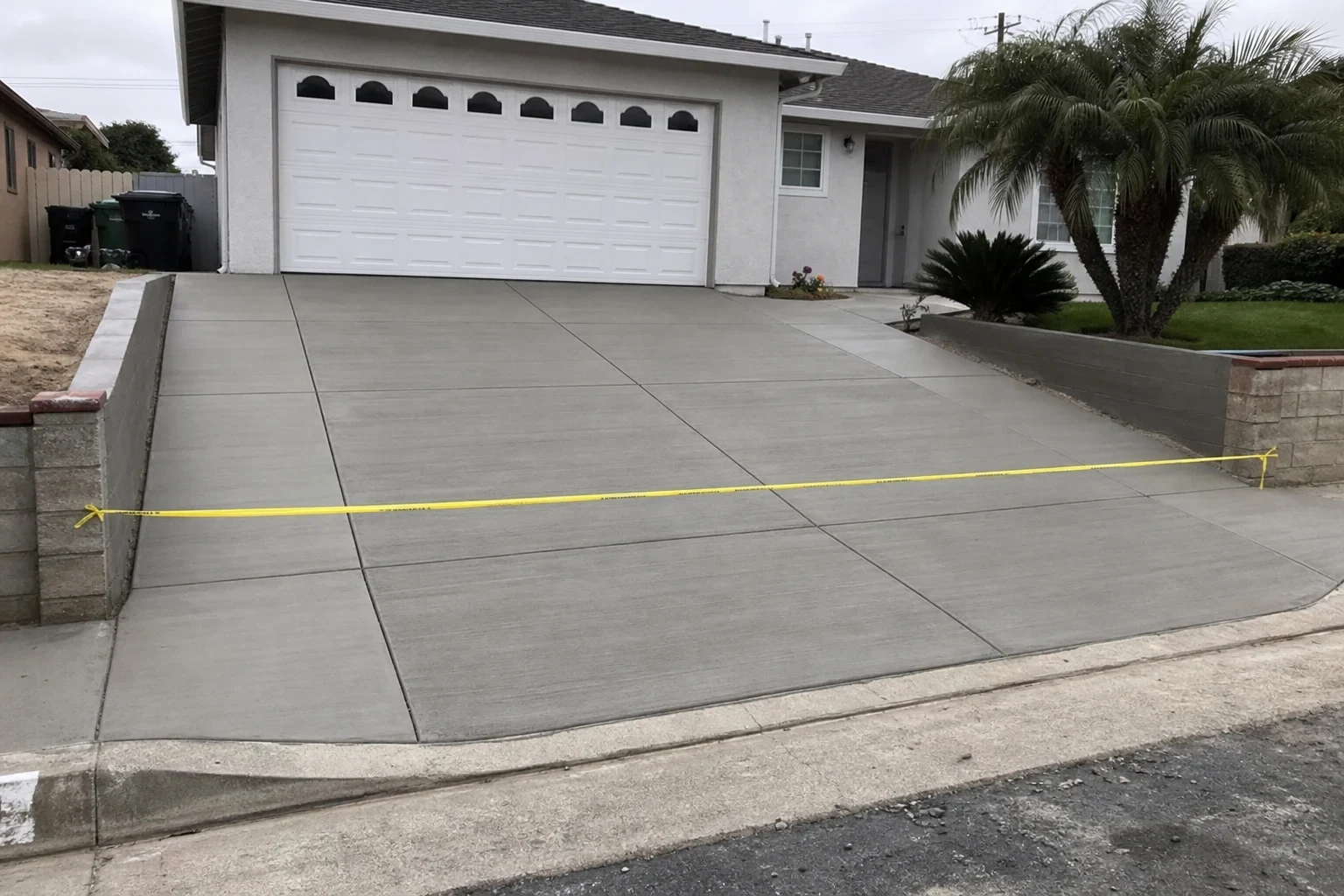
Tell us about the space and how you want to spend time in it. We will set up a visit, look it over carefully and walk you through what we find.