ServicesRV Parking Pads
Concrete RV Parking Pads in Cerritos
An RV parked on grass or thin pavers sinks, ruts and stains. We build concrete pads thick enough for the weight, sloped to drain and sized to your rig. Every job starts with a walk of your lot and a plain answer about what it needs.
A pad built for the weight it carries
A motorhome or loaded travel trailer puts far more weight on the ground than a car. Most of it sits on a few tire patches and jack pads. Under a standard driveway slab, that load can crack the concrete or push it down unevenly. An RV pad is planned for that weight from the base up.
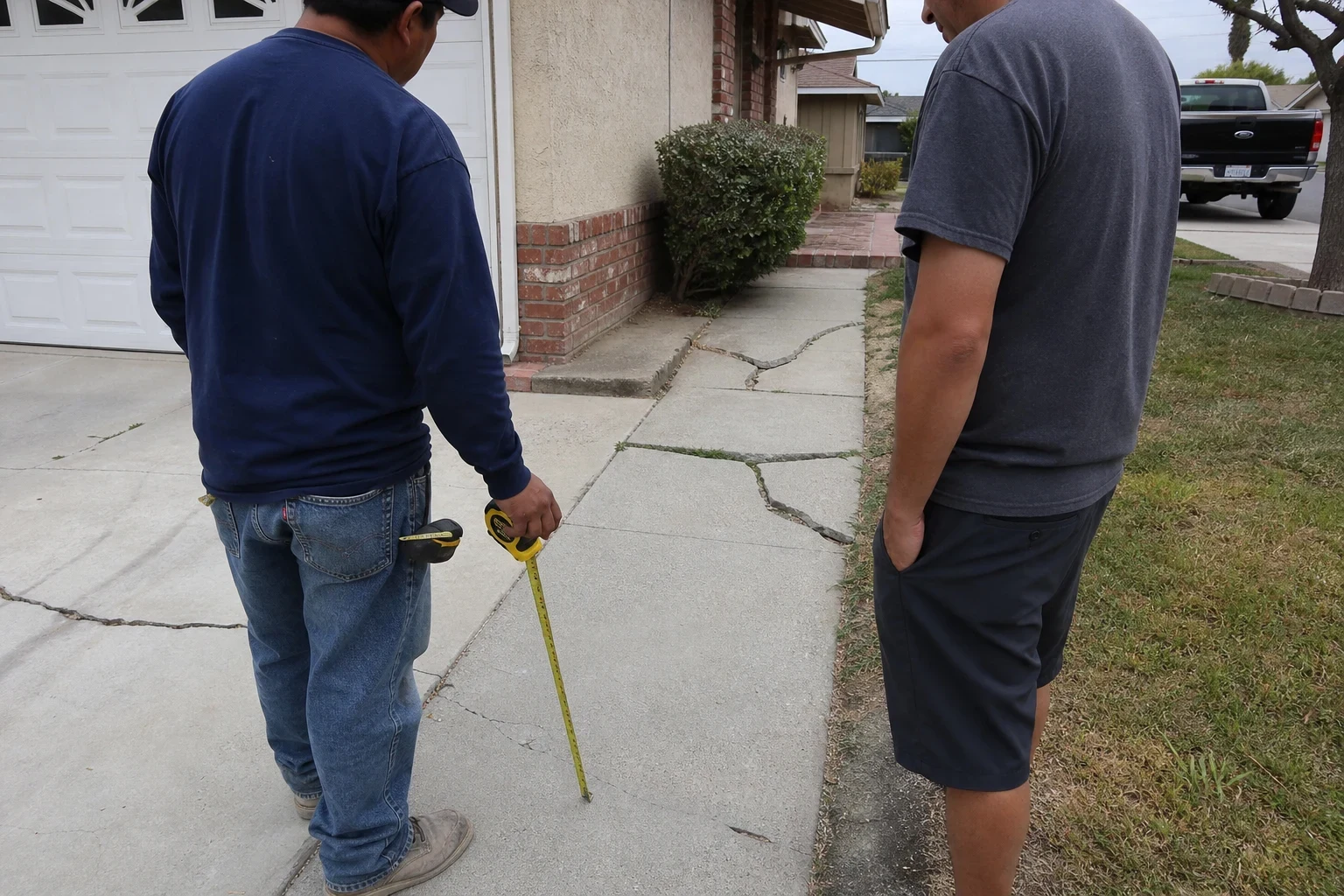
Before we suggest a thickness or a size, we look at your side yard or front setback, measure your rig and check how water moves across the lot. Then we tell you what we found, including when an existing slab is fine as it is and you only need an extension. We have been doing this kind of work for 15+ years, and that habit of looking first has not changed.
What goes into one of our RV pads
- Measuring your rig and turn path
- We measure length, width and wheelbase, then walk the path from the street to where it will park. Gate width, the curb and your swing room all shape the final layout.
- Digging out and compacting the base
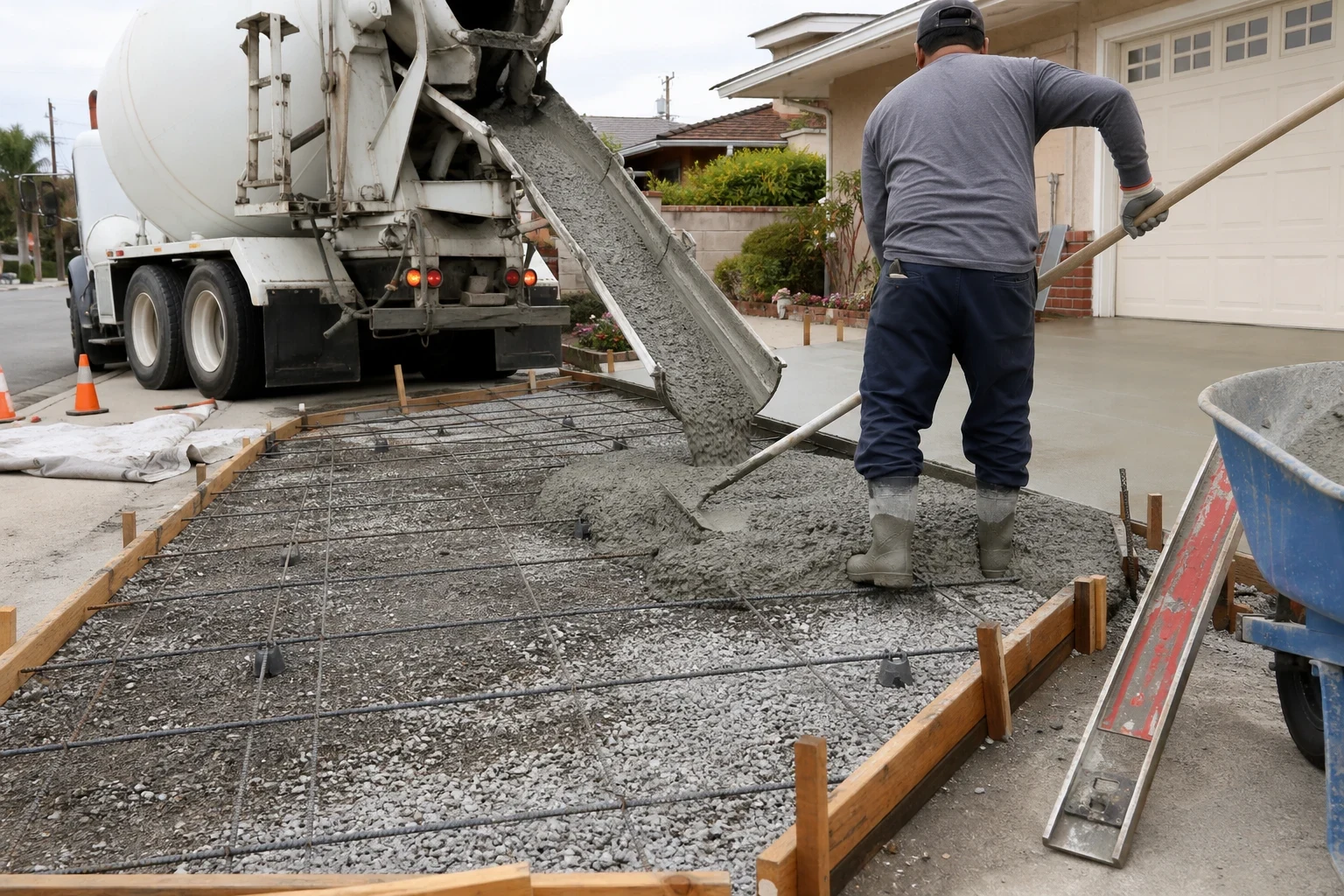
- We remove soft soil and roots, then lay and compact a gravel base in lifts. A solid base is what keeps a heavy slab from settling at one end.
- Rebar and a thicker slab
- RV pads get steel reinforcement and more depth than a typical walkway or patio. We set the rebar on supports so it stays in the middle of the slab during the pour.
- Slope and drainage
- The pad is pitched so rain runs away from your house and off the slab. Water sitting under concrete softens the base over time, so this step matters.
- Control joints and a non-slip finish
- Joints are cut where they can guide normal shrinkage cracks. A broom finish gives you grip when you step out of the RV on a damp morning.
Signs it is time for a proper RV pad
Ruts or sunken tire spots
If the ground holds a tire print after the RV moves, the soil is giving way. It gets worse each time you park.
Your driveway is cracking where the RV sits
Car-rated concrete often cracks under a motorhome's rear axle. A dedicated pad or a thicker section takes that load off your driveway.
Mud, weeds and oil stains
Gravel and dirt pads track mud in winter and grow weeds in spring. Concrete is easy to hose off and keeps leaks from soaking into the soil.
Leveling blocks every time
If you stack boards under the jacks just to get level, an even, properly sloped slab will save you that routine.
A new rig that is longer or heavier
An older pad may be too short or too thin for what you own now. We can tell you whether extending it makes sense or if it needs to come out.
How an RV pad project runs
- 1
Site visit and plain findings
We walk your lot, measure your RV, check the soil and look at drainage. You hear what we found in everyday terms before we talk about any plan.
- 2
Written estimate and permit check
You get a line-item estimate covering excavation, base, steel, concrete and finish. We check setback and paving rules, and if a new curb cut or approach is needed, we explain the city permit step.
- 3
Prep and forming day
We dig out, compact the base, set forms and place rebar. We protect your lawn edges, fence and the driveway we drive equipment over.
- 4
Pour and finish
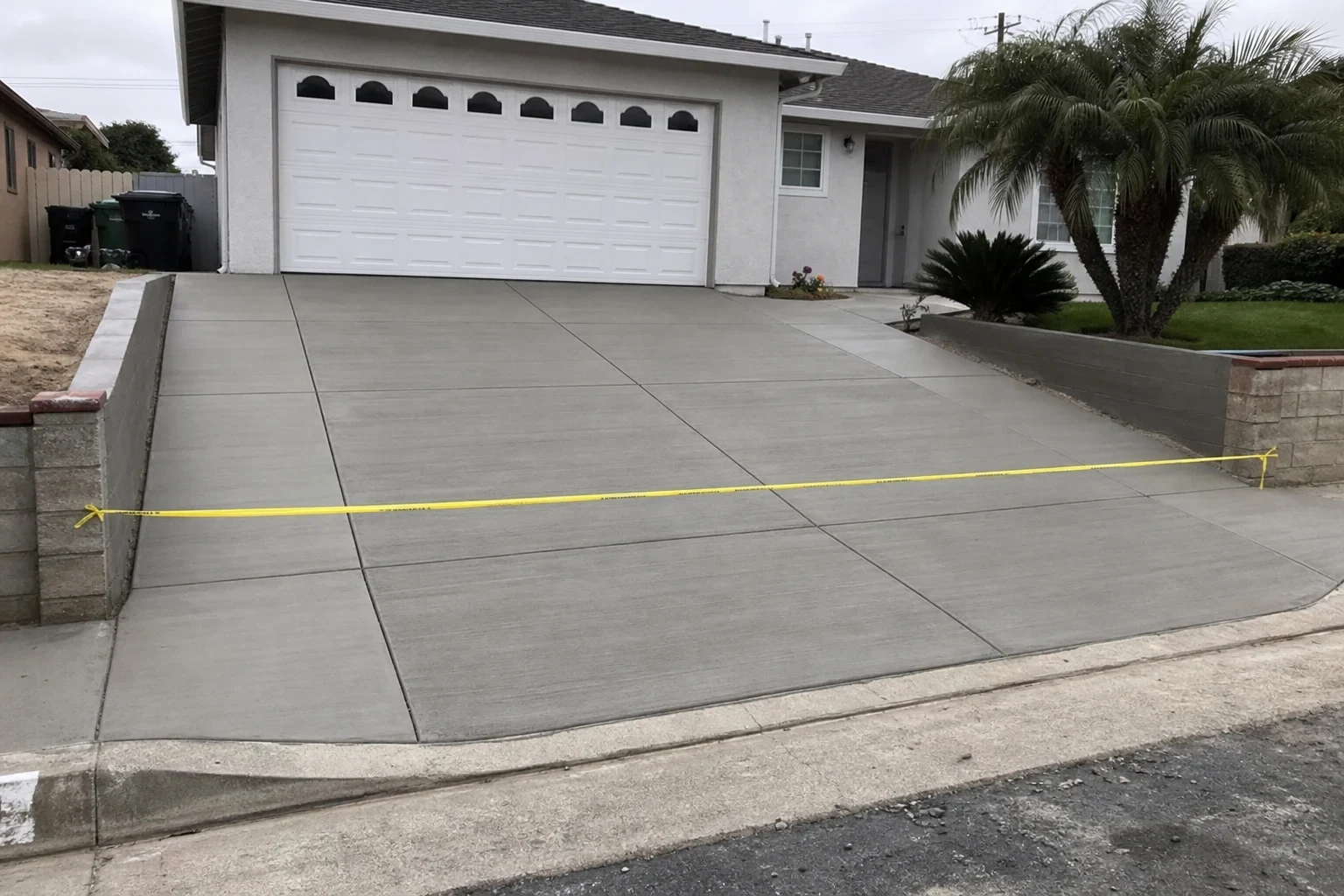
The concrete is placed, leveled, broom finished and jointed in one visit. We clean up the work area and haul off the spoils before we leave.
- 5
Curing and first parking
Light foot traffic is fine within a day or two, but a heavy RV should wait longer while the concrete gains strength. We give you a clear date before you pull it on.
What affects the cost of an RV pad
Every pad is priced from what we see on your property, not from a chart. The biggest drivers are size, thickness and what it takes to get a solid base under the slab. Your estimate shows each of these as its own line so nothing is hidden.
- Length, width and thickness
- A pad for a long motorhome uses far more concrete and steel than one for a small trailer. Extra depth for heavier rigs adds material too.
- Soil and base work
- Soft or clay-heavy soil may need more digging and more gravel to stay stable. We only know that after we look.
- Removing what is there now
- Breaking out old pavers, gravel or a thin slab adds labor and hauling. A clear lawn area is simpler to prep.
- Access for trucks and equipment
- A narrow side yard or a tight gate can mean pumping or wheeling concrete in. Open front access usually keeps the job quicker.
- Permits and curb work
- A new driveway approach or curb cut adds city permit fees and extra concrete work at the street.
RV pad questions we hear often
Something not covered here? (562) 442-1399
How thick should an RV parking pad be?
There is no single number that fits every rig. A heavier motorhome or softer ground both call for more depth, and every RV pad we pour is thicker than a typical walkway and tied together with rebar. We settle on the exact depth once we have measured your RV and checked the ground where it will park.
Can you just extend my driveway for the RV?
Often, yes. We look at how your current driveway was built, and if the RV wheels will sit on the new section, we pour that part to RV-pad specs. If the old slab is too thin for the load, we will tell you plainly.
Do I need a permit for an RV pad in Cerritos?
Some pads need city approval, especially if you add a curb cut or change the driveway approach. Setback and paving rules can also come into play. We find out what applies to your property and walk you through it before any work starts.
How long before I can park my RV on it?
Concrete keeps getting stronger for weeks after the pour. Walking on it is fine within a day or two, but the RV needs to wait longer. We give you a specific date based on the mix we used and the weather that week.
Who stands behind the pad once it is poured?
We do. Our company is licensed by the California State License Board (CSLB), and every RV pad we build comes with a 1-year warranty. We go over what that covers when we hand you the written estimate, so you know before the first shovel goes in.
Ready to get your RV off the grass?
Tell us about your rig and where you want it parked. We will come out, look over the spot and give you honest findings and a written estimate.