ServicesConcrete Slabs
Concrete Slabs in Cerritos
We pour concrete slabs for sheds, hot tubs, AC units, play areas and open space behind your home. Before we quote, we look at the soil, the grade and where the water goes, then tell you plainly what your slab needs.
A slab is only as good as what sits under it
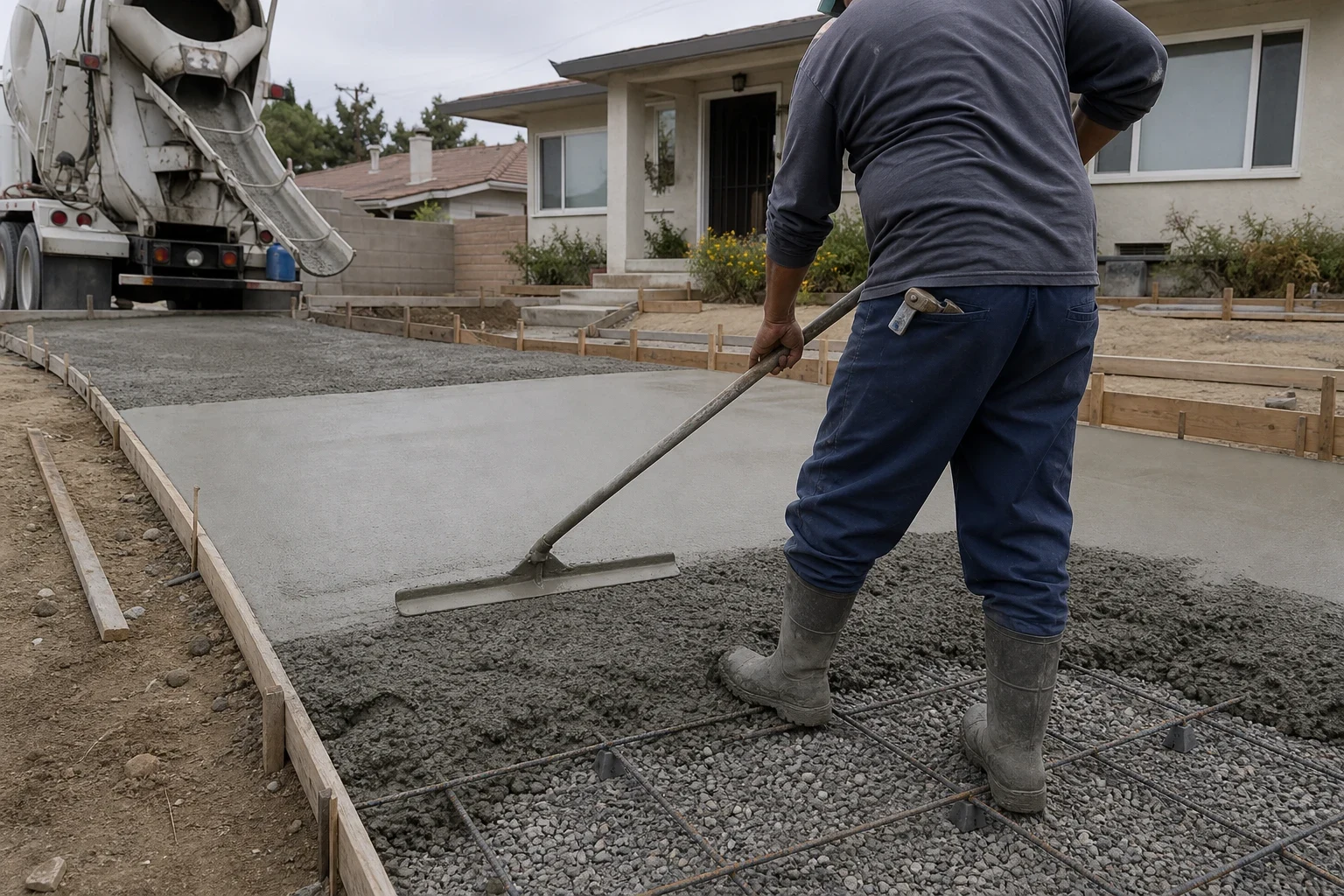
A concrete slab looks simple: a flat pad with square edges. Most of the work you never see happens before the truck arrives. Soil gets compacted, base rock goes down, forms are set with a slight slope so rain runs off, and reinforcement goes where the load will be.
That is why we start with an inspection, not a price. We check how the ground drains, whether old concrete or roots have to come out, and what the slab will carry. A pad for a garden shed and a pad for a filled hot tub are different jobs, and you should hear why before you decide anything.
We have been pouring concrete for over 15 years, and we are licensed by the California State License Board (CSLB). If you are planning a bigger outdoor space, our Patios and Concrete Backyards pages cover those projects.
What goes into a slab we pour
Site inspection and layout
We measure, mark the footprint and check the grade. You get our findings in plain words, including anything that could affect the slab later, like a low spot or a tree root close by.
Excavation and haul-off
We dig to the depth your slab needs and remove the soil, grass or old concrete. The debris leaves with us.
Compacted base
Crushed base rock is spread and compacted in layers with a plate compactor. This step is what keeps a slab from settling unevenly over the years.
Forms, slope and steel
Forms are set with a gentle fall away from your home so water drains off. Rebar or wire mesh goes in based on the load, and expansion joints go wherever the new slab meets a wall or existing concrete.
Pour, finish and control joints
We place, screed and finish the concrete: a broom finish for grip outdoors, or a smoother trowel finish under a shed or workshop. Control joints are cut so normal shrinkage cracks follow a straight line instead of wandering across the surface.
Curing and cleanup
We keep the surface damp through the first days so it cures evenly. Forms come out, the area gets cleaned, and you get clear dates for foot traffic and heavy loads.
Signs it's time for a new slab
- Bare dirt that turns to mud
- A side area or yard corner that never grows anything and tracks mud inside after a rain is a good candidate for a clean, level slab.
- A shed or equipment sitting on soil
- Pavers shift and wood bases rot. A shed, AC unit or water heater enclosure on a proper slab stays level.
- An old slab broken into pieces
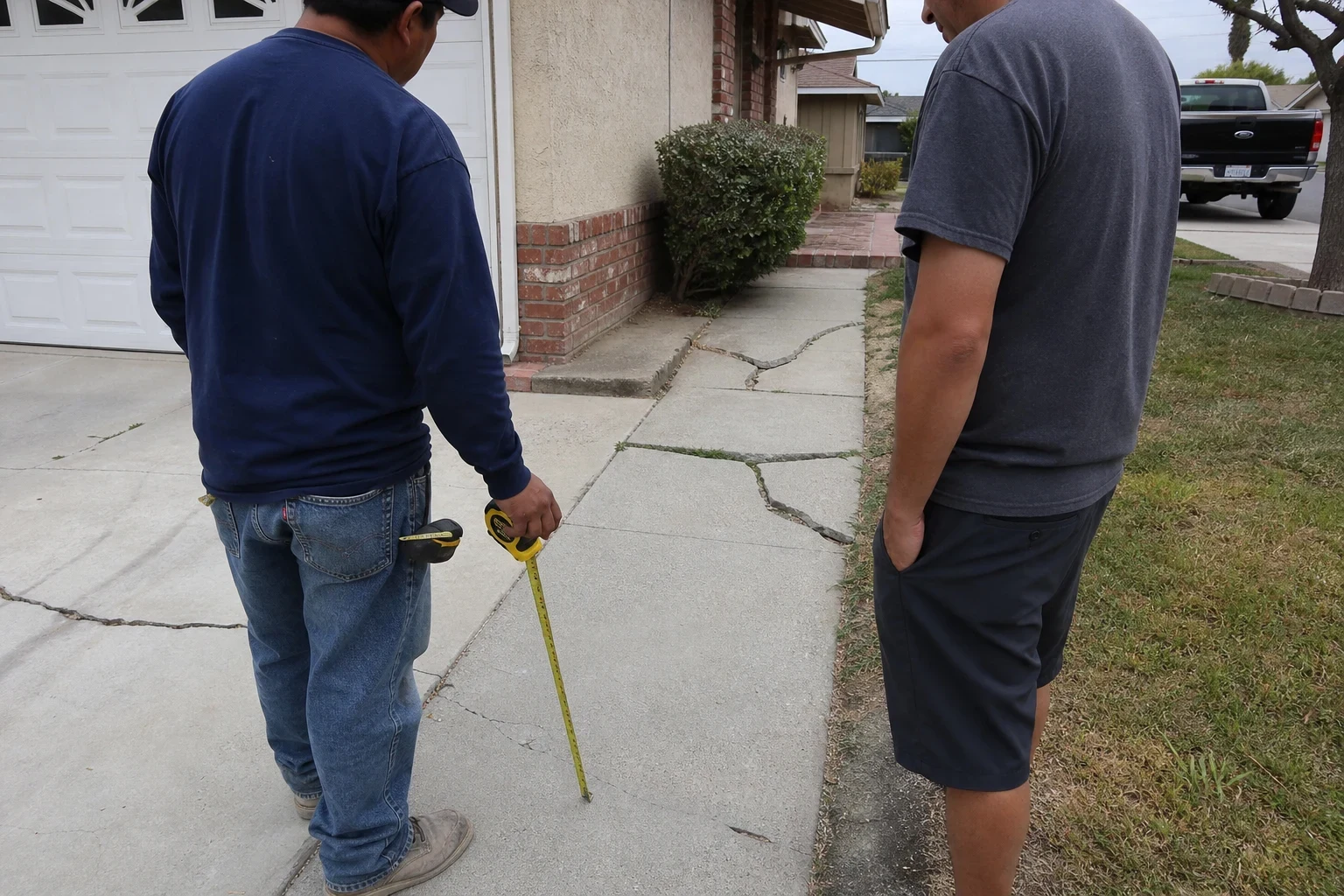
- Slabs poured decades ago can sink, tilt or split into separate sections. When that is what we find, we remove the old concrete and start fresh from the base.
- Water running toward your home
- If an existing pad slopes toward the house, rain ends up at the foundation. A new slab poured with the right fall sends it away.
- A hot tub, gazebo or workshop on the way
- Heavy additions need a pad sized for their weight. Tell us what is going on it, and we will set the thickness and reinforcement to match.
How a slab job runs
- 1
Phone call and site visit
You call, tell us what the slab is for, and we set a time to come out. At the visit we measure, check the soil and drainage, and walk you through what we found.
- 2
Written estimate
Your estimate lists excavation, base, reinforcement, concrete and finish as separate lines, so you can see where the money goes. If a permit is needed, we say so and pull it.
- 3
Prep day
We excavate, compact the base, set forms and place the steel. Plenty of homeowners like to look over the forms before the pour, and we are happy to show you.
- 4
Pour day
The truck arrives, we place and finish the concrete, and we cut the control joints. Walls, plants and your driveway are protected from splatter.
- 5
Cure and handover
We come back to strip the forms and clean up. Your new slab is covered by our 1-year warranty, and you know exactly when it is ready for each kind of use.
What sets the price of a slab
Every slab is priced from what we find at the inspection, so we don't guess at numbers before seeing the site. These are the things that move the cost most. Each one shows up as its own line on your written estimate.
- Size and thickness
- Square footage drives the amount of concrete and labor. A thicker slab for a hot tub or workshop takes more concrete and more steel than a standard pad.
- Access to the pour site
- If the truck can't reach the spot, concrete gets pumped or wheeled in. Narrow side yards and backyards without gate access add time.
- What has to come out first
- Breaking out an old slab, digging out roots or removing a lot of soil adds demolition and haul-off.
- Soil and grade
- Soft or uneven ground needs more base rock and compaction. A sloped yard may need deeper forms on the low side.
- Finish and permit
- A plain broom finish costs less than a decorative surface like stamped concrete. If your slab needs a permit, the fee and inspection timing are part of the estimate.
Concrete slab questions
- How thick should my slab be?
- Most patio and shed pads are 4 inches thick. Slabs that carry a hot tub, a workshop or a vehicle often need more thickness and heavier reinforcement. We decide after seeing your soil and hearing what the slab will hold.
- Will my new slab crack?
- Concrete shrinks as it cures, so some hairline cracking is normal. Control joints are there so those cracks land in a straight, planned line. Good compaction and drainage keep the larger kind of cracking from starting.
- Do I need a permit for a slab?
- It depends on the size, the location and what is going on it. A simple pad often doesn't need one, while a slab tied to a structure may. We check the requirements for your project and pull the permit when one is required.
- How long before I can use it?
- You can usually walk on it within a day or two and set light furniture on it after about a week. Heavy loads like a filled hot tub or a car wait longer, often around four weeks while the concrete gains strength. We give you dates for your specific slab.
- Can you pour in the summer heat?
- Yes. On hot Cerritos summer days we start early and keep the surface damp while it cures, so the top doesn't dry too fast and turn weak or dusty.
- Will a new slab match my existing concrete?
- We can match the height and finish closely, but new concrete stays lighter in color than old concrete for a while and may never match exactly. We tell you that at the inspection, not after the pour.
Tell us what your slab needs to hold
Give us a call and describe the project. We will set a time to look at the site and explain what we find before recommending anything. We work across Cerritos and nearby towns like Artesia, Norwalk and Lakewood.