ServicesWalkways and Sidewalks
Walkways and Sidewalks in Cerritos
A good walkway gets you from the driveway to the front door without a trip, a puddle or a wobble. We look at what is under your current path before we suggest anything, then pour a new walk that sits level, drains away from your home and stays put.
New walkways, planned from the ground up
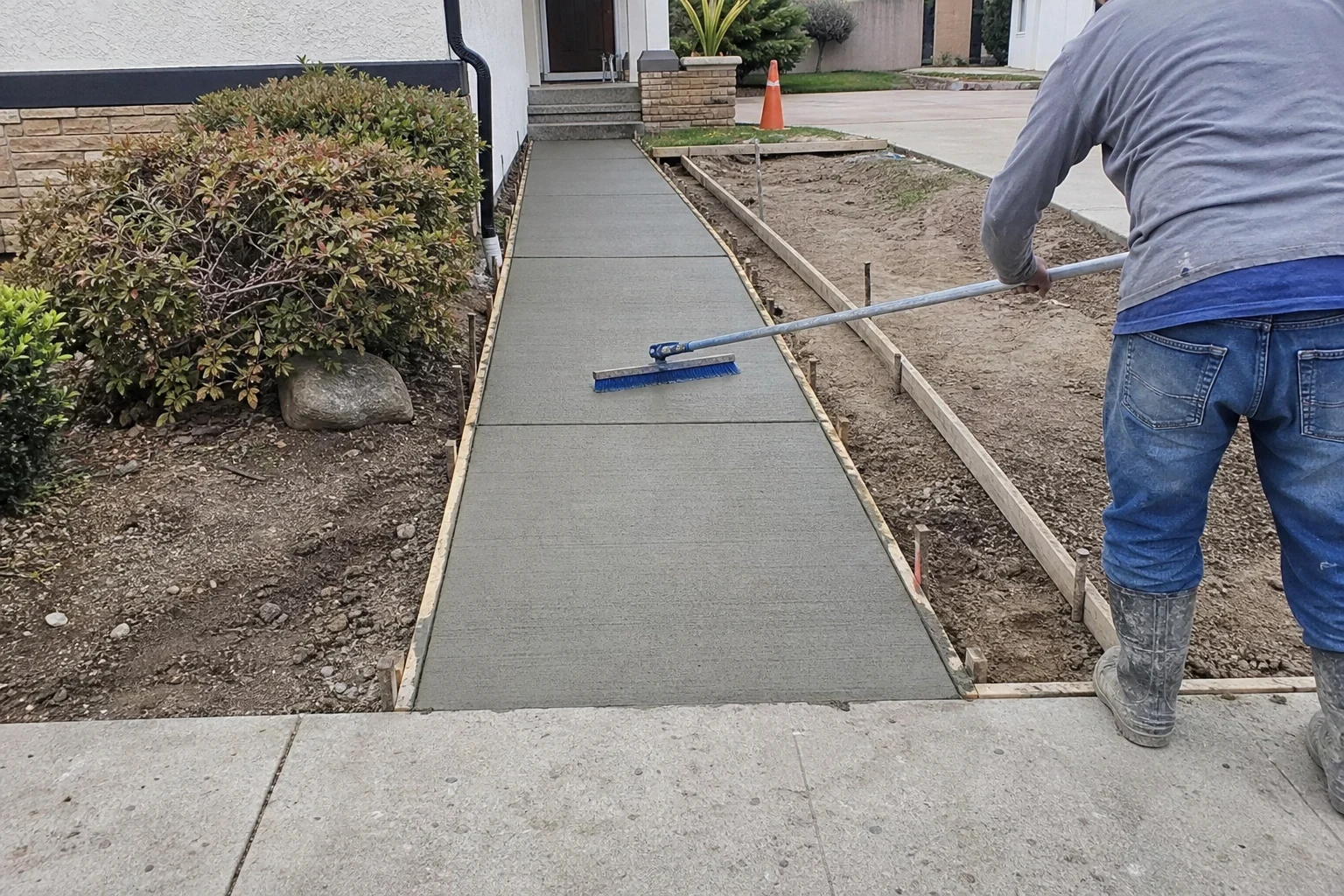
We pour new concrete walkways and sidewalks: front entry paths, garden walks, side paths to the backyard and the stretch along the street. Most problems with an old walk start below the surface, so that is where we start too. We check the soil, the base, nearby tree roots and where rainwater goes, and we tell you plainly what we found.
Once you know what caused the old path to lift or sink, the plan for the new one makes sense. You get a written estimate that shows the tear-out, base work, concrete and finish as separate lines, so nothing shows up later as a surprise.
We have been in business 15+ years and are licensed by the California State License Board (CSLB). Walkways look simple, but the slope, base and joint spacing are what decide how long one lasts.
What a new walkway includes
Tear-out and haul-away
We break out the old concrete, pavers or gravel and haul it off. Your lawn edges and planters are protected while we work.
Compacted base
We dig to firm soil and compact a gravel base in layers. A thin or loose base is the most common reason walkways settle and crack.
Root and drainage planning
Where a tree sits close to the path, we talk through root barriers or a slight reroute. We set a gentle cross slope so water runs off into the yard instead of toward your foundation.
Reinforcement and control joints
We add reinforcement suited to the width and use, and cut control joints at the right spacing so any shrinkage cracks fall in a straight line, not across the middle of a panel.
Finish that fits your home
A light broom finish gives good grip when the sprinklers run. We can also add a smooth border, a curve or a pattern; our Stamped Concrete page shows those options.
Signs it is time for a new walkway
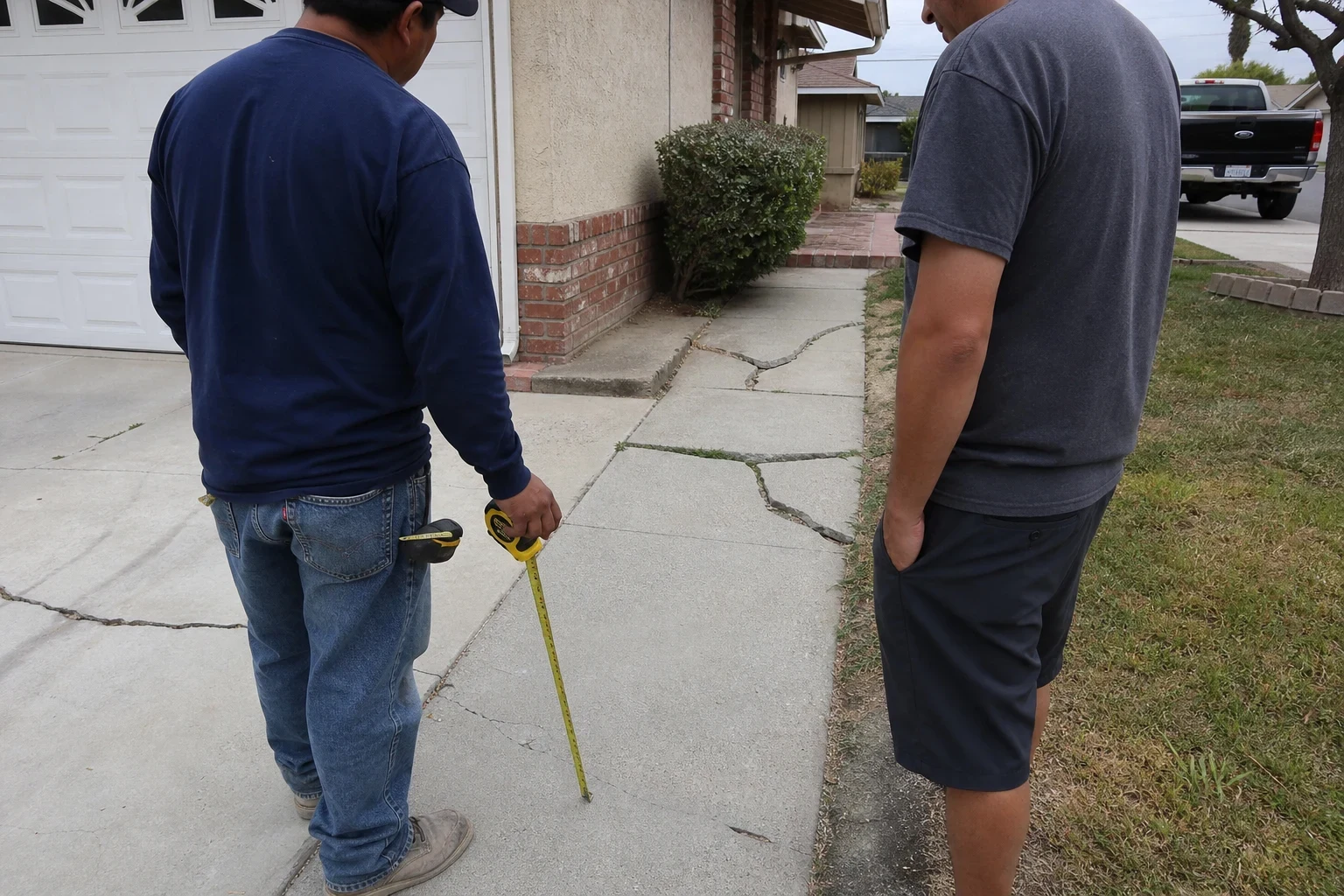
- Raised edges you catch with a toe
- When one panel sits higher than the next, it becomes a tripping spot for kids, guests and anyone carrying groceries.
- Water that sits after rain or watering
- Puddles mean the path has sunk or tilted. Standing water leaves slick spots and can push moisture toward your home.
- Cracks that keep spreading
- Hairline lines are normal. Wide cracks that grow each year, or pieces that rock when you step on them, point to a base that has given way.
- Roots lifting the slab
- Mature trees are common across the area, and their roots can heave a walk several inches. Pouring over the same roots without a plan only brings the problem back.
- A path that no longer fits
- Maybe the walk is too narrow for a stroller or wheelchair, or it does not reach the gate you actually use. A new layout can solve that.
How the job runs
- 1
Inspection and findings
We walk the path with you, check for roots, low spots and drainage, and explain what caused the damage. Then you get a written, line-item estimate.
- 2
Demo and base prep
We remove the old walk, dig to firm soil and compact the gravel base. If the job touches the public sidewalk, we take care of the city permit before this day.
- 3
Forms and reinforcement
We set forms to the agreed width and slope, then place reinforcement. You can look over the layout before any concrete arrives.
- 4
Pour and finish
We place, level and finish the concrete, cut control joints and apply the texture you chose. Most walkways are poured in a single day.
- 5
Cure and cleanup
We tape off the area, clean up the site and let you know when it is ready for foot traffic and when it can take heavier loads.
What moves the price of a walkway
Every walkway is priced from what we find on the inspection, so the estimate reflects your actual path. The biggest swings come from what has to be removed and what is going on underneath. We list each item separately so you can see where the money goes.
- Length, width and shape
- More square footage means more concrete and labor. Curves and steps add forming time compared with a straight run.
- Tear-out
- Removing thick old concrete or a layer of pavers and base takes more time and hauling than clearing a dirt path.
- Soil and roots
- Soft soil may need extra base material, and roots may call for a barrier or careful trimming with input from an arborist.
- Finish choice
- A broom finish is the simplest. Stamped patterns, color and decorative borders add material and finishing steps.
- Permits and access
- Work on the public sidewalk usually needs a city permit. Tight side yards or a long carry from the truck can also add labor.
Before you replace your front walk
- When is it safe to step on a freshly poured walkway?
- Most paths can handle normal footsteps after a day or two, though cool or damp weather can stretch that a little. Bikes, wheelbarrows and anything heavy should stay off for roughly a week while the concrete gains strength. Before we leave on pour day, we tell you exactly when each kind of use is okay.
- Our tree pushed up the old path. Won't that happen again?
- It can, if the new walk goes right back over the same roots with nothing changed. That is why roots are one of the first things we check when we inspect. Depending on what we find, a root barrier, a deeper base or moving the path a bit farther from the trunk may make sense, and we lay out the pros and cons of each so the choice is yours.
- Can you replace the sidewalk along the street in front of our home?
- Yes. That strip usually sits in the city right-of-way, which typically means a permit is required. We pull it as part of the job, and during the inspection we let you know whether your project needs one.
- Does a new walkway come with a warranty?
- It does. Our walkways carry a 1-year warranty, and we walk you through what it includes when you receive your written estimate.
- Will the new walk look like our existing driveway or patio?
- We can get the texture and finish very close. Fresh concrete starts out a shade lighter and evens out as it weathers. If you are thinking about redoing more than one area, our Driveways and Patios pages describe how we plan that work side by side.
Let us take a look at your walkway
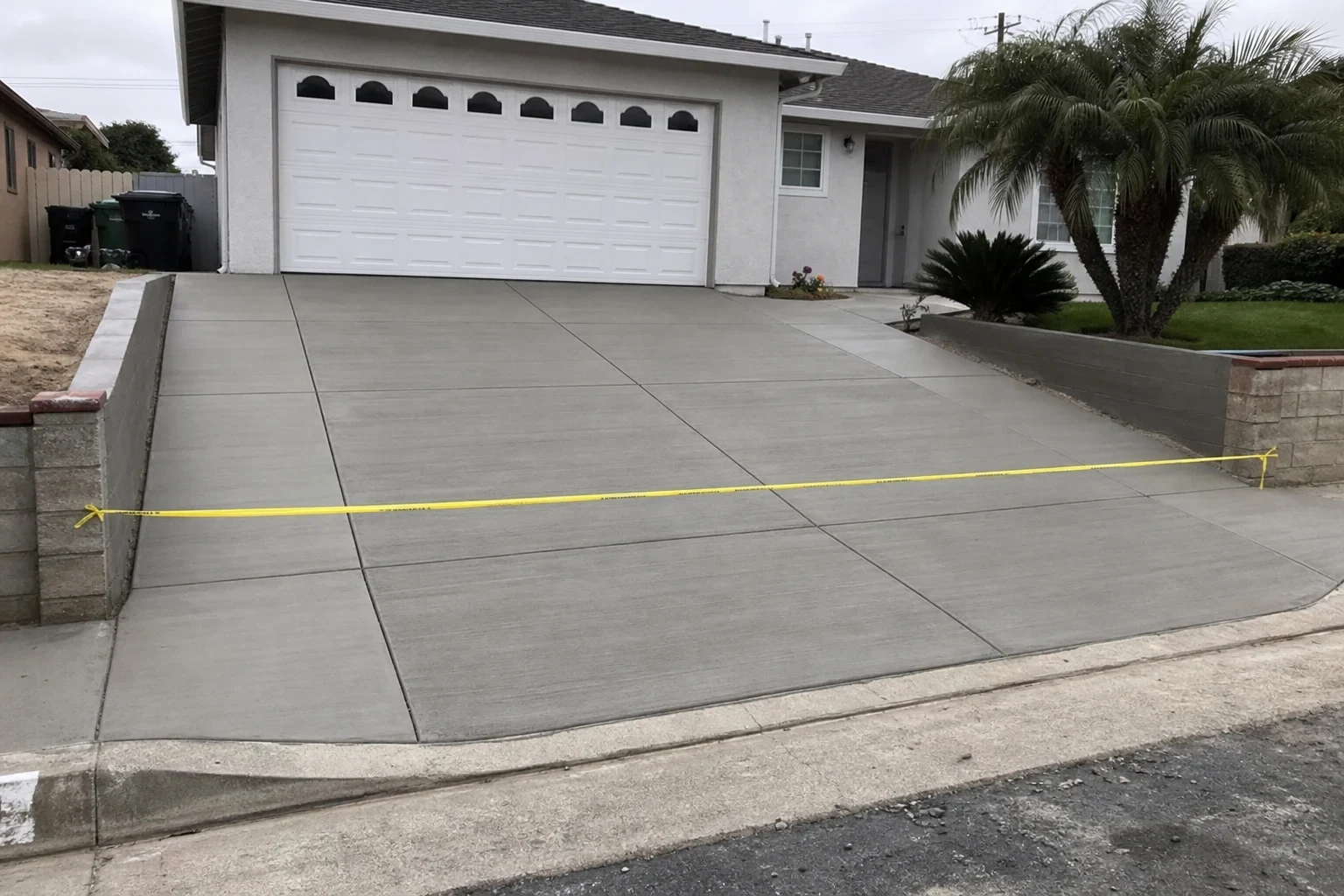
Tell us what is bothering you about the path, and we will set a time to inspect it and share what we find. You will know the cause and the plan before you decide anything.