ServicesDriveways
Concrete Driveways in Cerritos
We start by looking closely at your current driveway, the soil under it and where the water goes. Then we tell you plainly what we found and what a new driveway should include, so you can decide with the facts in front of you.
A new driveway that starts with what's underneath
Most driveways don't fail at the surface. They fail because the base was thin, the soil moved, or water was allowed to sit along an edge for years. Pouring fresh concrete over those problems just resets the clock.
So before we suggest anything, we walk the driveway with you. We check how the slabs have settled, where cracks run, whether tree roots are lifting a section and how the slope sheds water toward the street. Many homes around Cerritos sit on clay soil that swells when wet and shrinks when dry, and that movement shows up clearly in an older driveway if you know where to look.
You get a straight explanation of what we saw and what a replacement needs. We've been doing this work for over 15 years, and that habit of explaining first is how we keep customers from paying for things they don't need.
What a driveway replacement includes
Removal and haul-away
We break out the old concrete, load it and haul it off. Nearby lawn, planters and walls are protected while the equipment is working.
Base and grading
We dig to the right depth, compact the soil and add a layer of crushed base. Grading is set so water runs away from your garage and toward the street.
Reinforcement
Rebar or wire mesh goes in based on what the driveway will carry. A spot where you park a heavy truck gets more attention than a strip that only sees foot traffic.
Control joints and finish
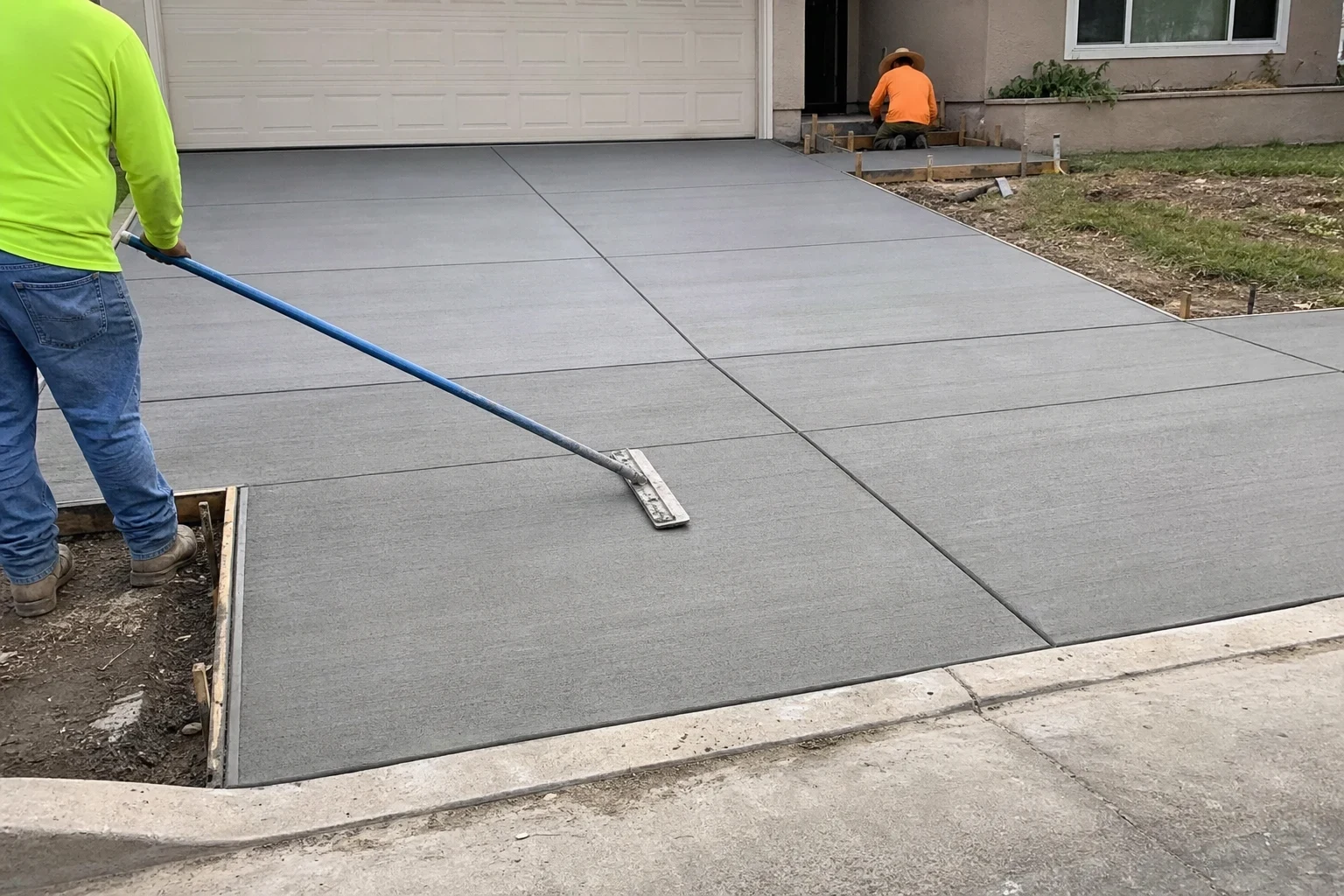
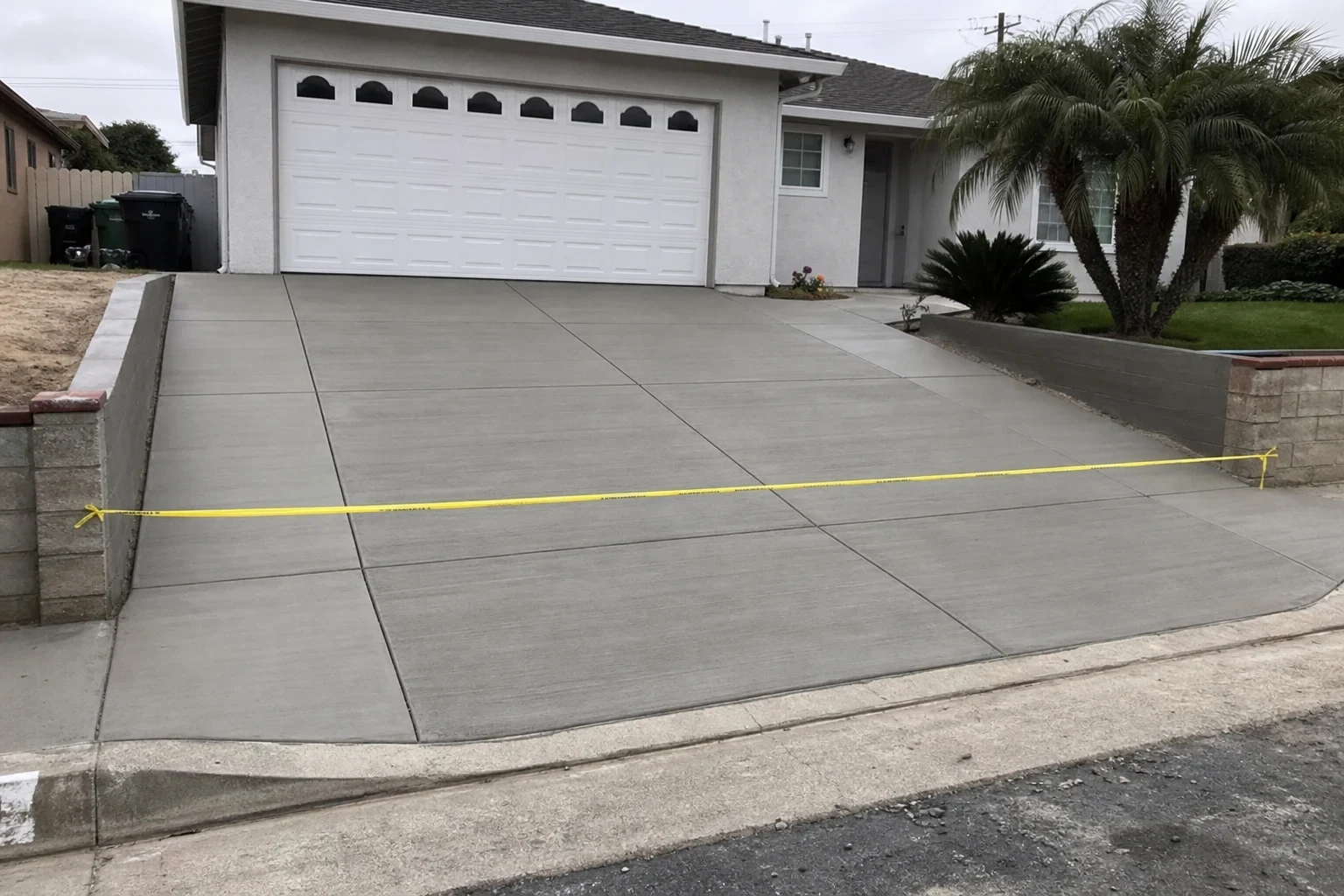
Joints are cut where they'll guide cracking into straight, planned lines. Most driveways get a broom finish for grip, and we can talk about stamped concrete if you want a decorative look.
The approach and permit
The section where your driveway meets the street usually needs a city permit. We pull it and line up the city's inspection so that part is done right.
Signs it's time for a new driveway
Slabs at different heights
When one section has sunk or lifted, the base underneath has moved. It's a trip hazard and it tends to get worse each year.
Cracks that keep spreading
A hairline crack is normal for concrete. Wide cracks, cracks that branch across the slab, or pieces breaking loose mean the driveway is near the end of its life.
Water pooling near the garage
Puddles that sit after watering or rain point to a slope problem. Over time that water softens the soil and works into the slab.
Root damage
Roots from a nearby tree can push up a whole panel. A new pour lets us plan around the tree instead of fighting it.
A worn, flaking surface
Pitting and a crumbly top layer usually come from a weak original mix or poor finishing, and patching rarely holds for long.
How your driveway project goes
- 1
Walkthrough and findings
We look over the driveway, soil and drainage with you and point out what's causing the wear. You hear what we found in plain terms before any recommendation.
- 2
Written estimate
You get an estimate that lists removal, base work, reinforcement, finish and permit costs line by line, so nothing comes as a surprise later.
- 3
Tear-out and prep
The old concrete comes out, the ground is graded and compacted, and forms and reinforcement go in. When the city requires it, the approach gets signed off before the pour.
- 4
Pour and finish
We place and finish the concrete in one day, cut the control joints and leave the site clean. On hot summer days we pour early to give the concrete a better cure.
- 5
Curing and final look
Plan on staying off it on foot for about a day and keeping cars off for about a week. We come back to walk the finished driveway with you.
What affects the cost of a new driveway
Every driveway is priced from what we find on site, not from a flat rate. Two driveways the same size can cost different amounts because of what's under them and how they're used. Your written estimate spells out each piece.
- Size and thickness
- Square footage drives material and labor. A driveway that carries heavier vehicles may need a thicker slab.
- Removal and soil condition
- Thick old concrete, extra layers or soft soil that needs more base all add time and material.
- Finish choice
- A broom finish is the simplest. Stamped or colored concrete takes more labor and materials.
- Access and drainage work
- Tight access for equipment, added drains or regrading to fix water flow can change the scope.
- Permits
- Work on the street approach usually needs a city permit, and that fee is listed in your estimate.
Driveway questions we hear often
Something not covered here? (562) 442-1399
Is it possible to put a fresh layer on top of the driveway I have?
In most cases it isn't a good idea. The soil movement or weak base that broke up the old slab stays right where it is, and a thin new layer tends to split along the same lines within a few seasons. We'll walk you through what we see and why taking it out and starting over usually holds up longer.
How long will I be without my driveway?
Removal and prep usually take a day or two, and the pour happens in a single day. After that, you can walk on it in about a day, but cars should stay off for about a week while the concrete gains strength.
Who oversees your work, and do you stand behind it?
We're licensed by the California State License Board (CSLB). Our driveway work also comes with a 1-year warranty, and we're happy to go over what it covers when we talk.
Will my new driveway crack?
All concrete can develop small cracks as it cures and as the ground shifts. Good base work, reinforcement and properly placed control joints keep those cracks small and in straight lines where they're hard to notice.
Do you work outside Cerritos?
Yes, we also build driveways in nearby cities like Artesia, Norwalk, Lakewood and Cypress. Our Service Areas page lists the rest.
Let's take a look at your driveway
Tell us what's going on with your driveway and we'll set up a time to come see it in person. You'll get clear findings and a written estimate to think over at your own pace.