ServicesGarage Floors
Concrete Garage Floors in Cerritos
A garage floor carries your car, your storage and sometimes a workshop. When the old slab has cracked, sunk or soaked up years of oil, we look at it closely, explain what we see in plain terms and pour a new floor built to stay flat.
A new floor, starting with an honest look at the old one
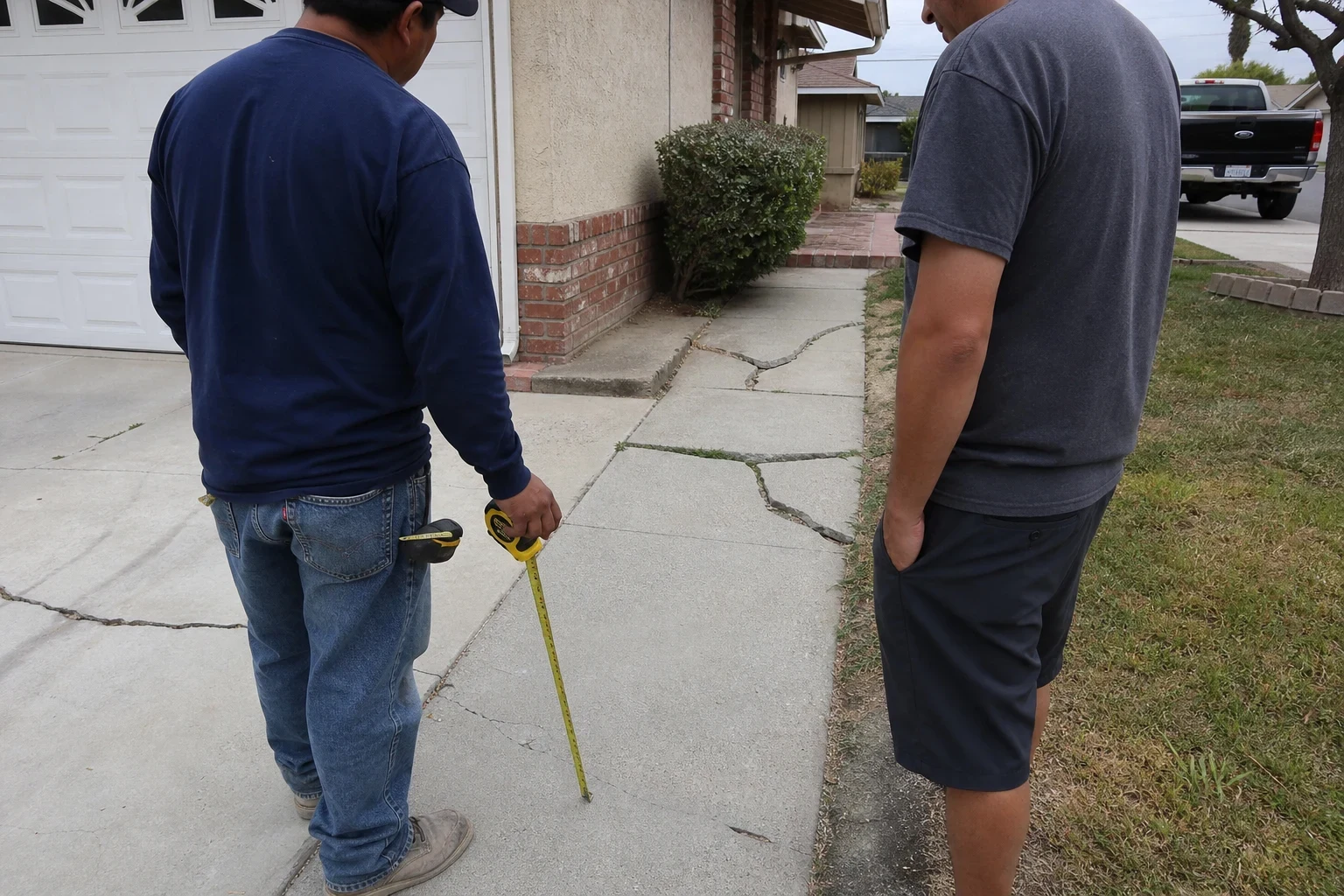
Most garage floors we see were poured when the house was built. Over decades, the soil underneath settles, water finds its way in at the door, and the slab starts to crack, tilt or drop away from the driveway. Sometimes a floor only looks rough and is still sound. Sometimes the damage goes all the way through.
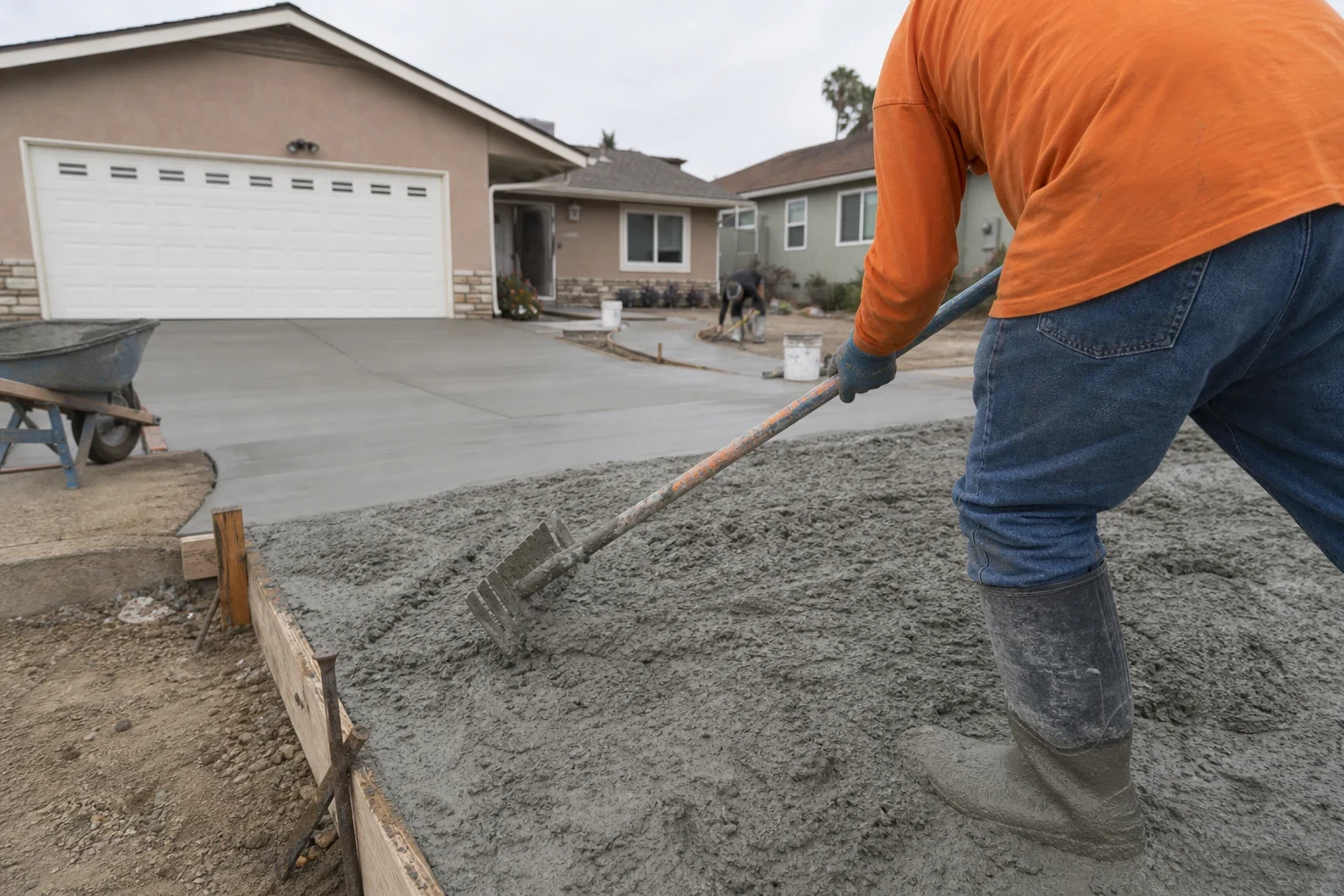
We start every garage floor job by looking closely at the slab, the edges and the transition to your driveway, and we tell you what we found before we recommend anything. If a full replacement is the right call, we remove the old concrete, rebuild the base and pour a new slab sloped so water drains out the door, not toward your home. We have been doing this work for more than 15 years, and we are licensed by the California State License Board (CSLB).
What a garage floor replacement includes
- Inspection and plain findings
- We check cracks, low spots, edges and how the slab meets the driveway and the house. You hear what we found and why, before any recommendation.
- Removal and haul-off
- We break out the old slab, load it out and haul it away. The garage is left as an empty, clean pad ready for base work.
- Base prep and compaction
- Soft or washed-out soil is the most common reason a garage floor fails. We grade the subgrade, add base material where it is needed and compact it so the new slab has firm, even support.
- Reinforcement and proper thickness
- We place rebar or wire mesh and set the forms for the right thickness for a floor that carries vehicles.
- Slope and control joints
- The floor is pitched gently toward the garage door so spills and rinse water run out. Control joints are cut in planned lines so any shrinkage cracks stay where they belong.
- Finish of your choice
- A smooth trowel finish is easy to sweep and works well under coatings. A light broom finish gives more grip near the door. We will talk through which suits how you use the space.
Signs your garage floor is ready to be replaced
Cracks you can catch a fingernail in
Hairline lines are normal. Wide cracks, or cracks where one side sits higher than the other, usually mean the base underneath has moved.
The slab has sunk or tilted
If a gap has opened where the garage meets the driveway, or the floor dips near the door, the soil below has settled.
Water pools inside
Puddles that sit after you wash the car or after rain mean the slope is gone. Standing water near the house wall is worth taking seriously.
Crumbling or flaking surface
A surface that scales, dusts or breaks apart in patches has lost its strength and will keep getting worse.
Oil and stains that run deep
Years of drips can soak into old concrete. If you plan to coat the floor or use the garage as a workshop, a fresh slab gives you a clean start.
How a garage floor job runs
- 1
Inspection and written scope
We visit, look over the floor and the driveway transition, and explain what we found. If replacement makes sense, you get a written estimate with each part of the work listed.
- 2
Clear-out and permits
You empty the garage before we arrive. If the city requires a permit for the work, we pull it and handle the scheduling with the building department.
- 3
Demolition and base work
We remove the old slab, protect the walls and door track, then grade and compact the base. This is usually the longest part of the job.
- 4
Pour and finish
Reinforcement goes in, the concrete is poured, leveled, sloped and finished, and control joints are cut.
- 5
Curing and handoff
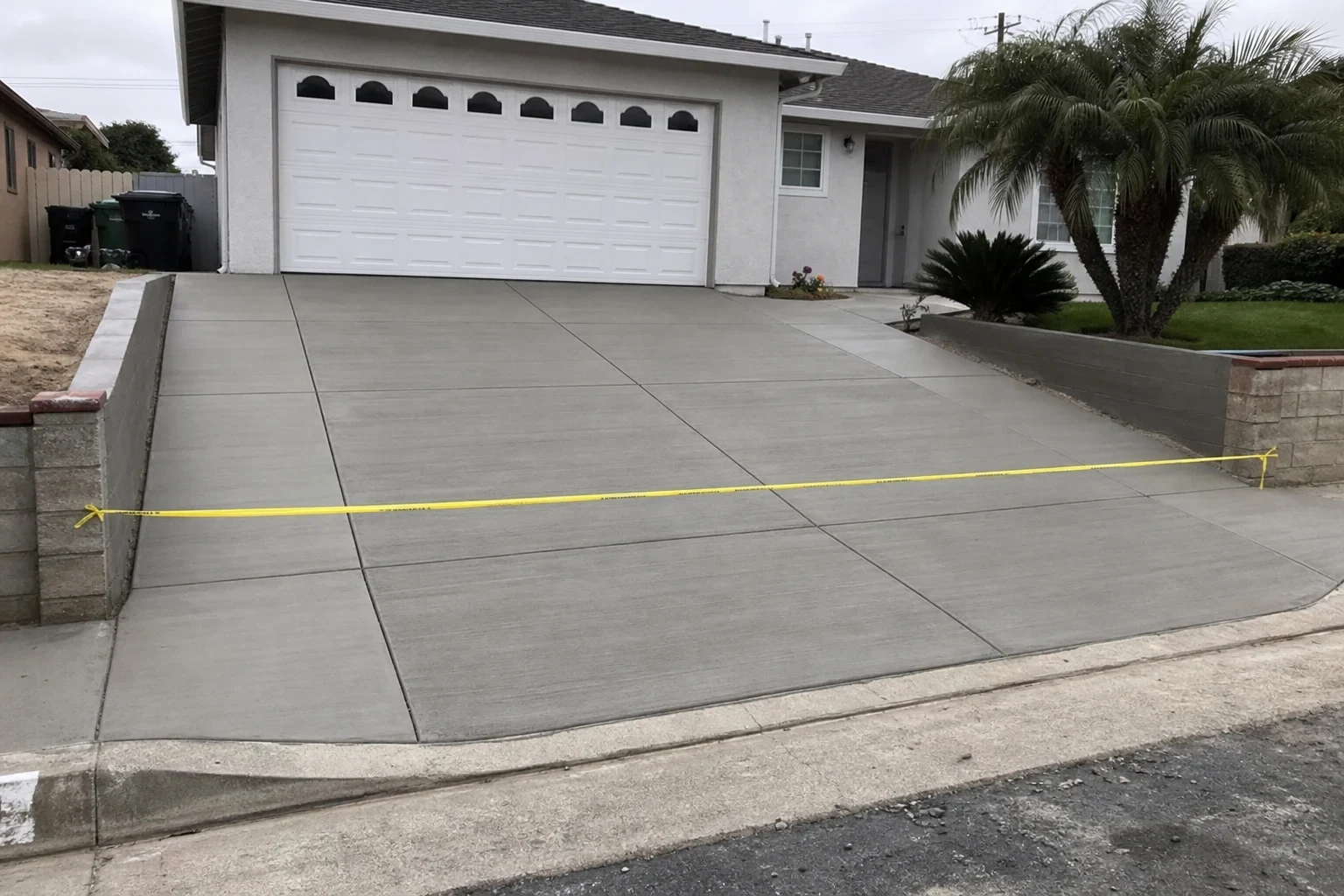
You can usually walk on the floor in a day or two, but cars should wait about a week. We clean up, walk the floor with you and explain how to care for it while it cures.
What affects the cost of a new garage floor
Every garage is a little different, so we price after we have seen it. The biggest swings come from what is under the old slab and how much work it takes to get it out. Your written estimate breaks the job into separate lines, so nothing is hidden inside one vague total.
- Floor size
- A one-car garage and a three-car garage need very different amounts of concrete, base and labor.
- Removal of the old slab
- Thicker slabs, or slabs with heavy reinforcement, take more time to break out and more loads to haul away.
- Soil and base condition
- Firm soil needs light prep. Soft, wet or washed-out soil needs to be dug out and replaced with compacted base before we pour.
- Finish and extras
- A plain trowel finish costs less than adding a new driveway apron or extra reinforcement for heavy vehicles.
- Permits and access
- Permit fees, if required, are included as a line item. Tight access for equipment can add labor time.
Garage floor questions we hear often
Something not covered here? (562) 442-1399
Can you pour new concrete over my old garage floor?
In most garages it is not a good idea. Pouring on top raises the floor, can cause problems at the door and the step into the house, and leaves the original settling problem in place. We will look at your floor and tell you honestly what makes sense.
How long will I be without my garage?
Demolition, base prep and the pour usually take a few days, depending on size and soil. After that, plan on about a week before parking a car on the new floor. We give you a clear timeline on our first visit.
Will the new floor crack?
All concrete shrinks a little as it cures. Good base prep, reinforcement and properly spaced control joints keep any cracking to those planned lines, where it does no harm.
Can I put an epoxy coating on the new floor?
Yes. New concrete needs to cure fully first, usually about a month, before a coating goes on. Let us know at the start and we will give the floor a smooth trowel finish that suits coatings.
Do you offer a warranty?
Yes. Our garage floor work comes with a 1-year warranty. We explain what it covers when we go over your estimate.
Find out what your garage floor really needs
Tell us what you are seeing, and we will set a time to come look at the floor. You will get plain findings and a written estimate before any work starts.